India’s export ecosystem is navigating a transformative phase, and according to Union Commerce and Industry Minister Piyush Goyal, deeper Centre-state collaboration is the key lever to accelerate this progress. Speaking at recent national export strategy forums, the Minister emphasised the urgent need to upgrade quality standards, enhance trade diplomacy, and strengthen last-mile connectivity to bolster India’s global trade competitiveness.
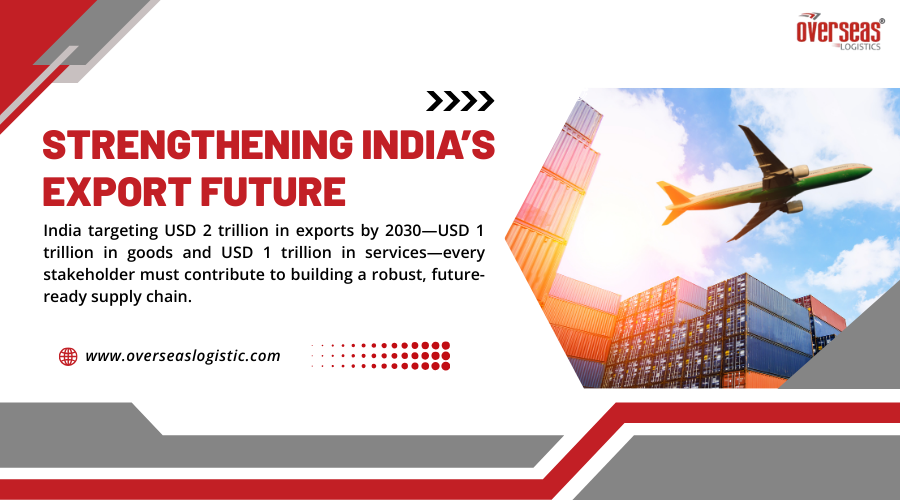
With India targeting USD 2 trillion in exports by 2030—USD 1 trillion in goods and USD 1 trillion in services—every stakeholder must contribute to building a robust, future-ready supply chain.
State-Centre Partnership: A Strategic Pillar for India’s Export Growth
Strengthening exports is no longer just a central mandate. Minister Goyal highlighted that states must take equal ownership of national export targets. With each state having unique strengths—such as textiles, minerals, agriculture, marine products, technology services, and industrial clusters—the synergy between state-specific strategies and central policy frameworks becomes essential.
India’s export basket has diversified significantly in the last decade. Sectors such as electronics, pharmaceuticals, engineering goods, and digital services have recorded high-value growth. However, uneven infrastructure and regulatory disparities across states continue to limit efficiency.
A coordinated action plan can address challenges related to:
-
Infrastructure gaps in industrial corridors
-
Logistics costs, currently at 14–15% of GDP, are higher than the global benchmark of 8–9%
-
Slow adoption of digital documentation and export facilitation tools
-
Limited export-oriented MSME capacity in Tier-2 and Tier-3 regions
Improving Quality Standards to Strengthen India’s Export Reputation
Minister Goyal reiterated that quality is India’s passport to global markets. To become a trusted export hub, Indian products must consistently match or surpass international benchmarks.
Key focus areas include:
1. Strengthening Certification and Compliance Frameworks
India is rapidly increasing its footprint of BIS-certified products. Over 640 products now fall under mandatory quality norms—up from fewer than 100 a decade ago.
2. Upgrading Testing and Inspection Infrastructure
The government is investing in modern testing labs, phytosanitary facilities, and customs inspection centres, ensuring faster clearances.
3. Promoting Best-Practice Sharing Among States
States with strong export performance—Gujarat, Maharashtra, Tamil Nadu, and Karnataka—are encouraged to share replicable models with emerging export states.
Enhanced quality controls not only boost export reliability but also reduce rejections, which currently affect sectors like:
-
Agriculture and marine exports
-
Pharmaceuticals
-
Handicrafts and small-scale manufacturing
Trade Diplomacy Gains Momentum as India Expands Global Market Access
To secure stronger export opportunities, India is actively expanding its trade diplomacy footprint. Minister Goyal highlighted multiple initiatives that aim to unlock new markets and deepen economic ties.
Recent Trade Diplomacy Highlights
-
Finalisation and negotiation of multiple trade agreements with the EU, UK, Australia, and Oman.
-
Strengthening B2B partnerships through international trade fairs and global investor meets.
-
Positioning India as a key player in resilient global supply chains amid global realignment.
-
Enhancing cooperation with South Asian, African, and Middle Eastern markets.
India’s strategic focus lies in tapping high-growth sectors such as:
-
Renewable energy equipment
-
Electronics manufacturing
-
Digital services and fintech
-
Pharmaceuticals and medical devices
-
Processed foods and agri-exports
With global demand shifting rapidly, diplomatic agility enables India to stay ahead of its competitors.
Strengthening Last-Mile Connectivity: A Critical Component of Export Competitiveness
The Minister emphasised that export competitiveness begins at home, particularly with last-mile logistics. Inefficiencies here significantly increase transportation time and cost.
Key Logistics Challenges
-
High road transportation dependency
-
Port congestion
-
Slow multimodal integration
-
Limited rail-freight corridors for industrial clusters
-
Inadequate cold-chain logistics for perishables
Government Interventions Underway
-
Expansion of the PM Gati Shakti National Master Plan, integrating roads, railways, waterways, and ports
-
Boosting coastal shipping and inland waterways to reduce freight costs
-
Development of dedicated freight corridors (DFCs)
-
Modernisation of container terminals and warehousing zones
-
Adoption of AI-enabled logistics and digital tracking systems
Global benchmarks indicate that enhancing connectivity can increase export efficiency by up to 25%, making it a crucial area for reform.
Building a Future-Ready Export Ecosystem Through Integrated Policies
Achieving long-term export resilience requires a synchronised, multi-layered approach. India’s export roadmap incorporates:
-
Skill development initiatives to create an export-ready workforce
-
MSME export support, including credit access and digital onboarding
-
Expansion of Free Trade Warehousing Zones (FTWZs)
-
Promotion of green logistics and sustainable supply chains
-
Encouraging start-ups in logistics, supply chain tech, and manufacturing
This comprehensive strategy aims to ensure that India’s export ecosystem is globally competitive across quality, scale, innovation, and sustainability.
Conclusion
Minister Piyush Goyal’s call for stronger state-Centre collaboration is a decisive step toward unlocking India’s export potential. With a clear focus on quality standards, global trade diplomacy, and last-mile connectivity, India is poised to accelerate its export momentum.
As global supply chains evolve, proactive coordination, infrastructure modernisation, and unified policy execution will define India’s rise as a prominent global trading power.